
Education of Orphans and Vulnerable Children in Tunisia
The Potential of Edtech as a Tool for Inclusive and Sustainable Development
Abstract
Once a source of inspiration among Middle East and North Africa region countries for its democratic achievements, Tunisia is now facing complex social, economic and political challenges that weaken the pursuit of the Sustainable Development Goals, namely in quality education.
Education has been one of the pillars of nation-building since the country’s independence and is reflected in the high level of government investment in the sector over the years. Despite some important achievements (namely in terms of access to basic education), the public education system is currently facing a learning crisis, particularly in terms of equity.
These challenges are particularly relevant for vulnerable and orphaned children, who often have fewer opportunities to attend school. A holistic approach is required to address the challenges faced by orphans and vulnerable children, to ensure access to quality education for all students, and to promote human development.
Tunisia’s development strategies place a significant emphasis on digital technology, with the government implementing initiatives to enhance the integration of technologies in educational settings.
However, most investments in Edtech revealed poor results in student outcomes and teachers’ pedagogical practices, and have not been able to address the inequalities in the education system, widening the digital divide. This project aims to address inequalities in access to educational technology by donating devices to an organisation that supports orphans and vulnerable children. It also aims to inspire educational transformation through a comprehensive approach to the integration of Edtech, where technology, guided by pedagogy, is conceived as a tool for building equitable, quality education that lays the foundations for sustainable development.
Education
Formerly known as the “classroom of the Middle East” and traditionally a major priority for Lebanese households and a central pillar of Lebanese economy and society, the education system in Lebanon currently faces significant challenges and risks failing both students and teachers, while eroding the public positive perception about national education.
1. A tale of two systems
The development of the education system in Lebanon was characterised by an almost unwavering dominance of the private sector in service delivery in education, with this sector enrolling nearly two thirds of students in 2021, which is one of the greatest private sector shares of primary and secondary school students in the world. The history of education system privatization created a structural dichotomy between the public and the private sectors in education and led to large inequities, by placing the economic burden of education on households, and maintaining educational success as a function of socioeconomic background.
1.1. Education Funding
Although private and public investments on education in Lebanon are comparable to OECD standards (around 4,5% in 20195 – and world Education Forum 2015 recommends 4-6% of GDP in Education to achieve SGD4), significant levels of private spending from households exceed and contrast with the government’s decreasing trend of investment in education. Government budget expenditures on education are low and below MENA region average, having decreased from 2,1% in 2015 to 1,8% in 2020.
Public funding of education has been insufficient and inefficient, especially when considering that almost 30% is invested in private sector subsidies, such as allowances to civil servants and free-private schools’ support. Additionally, within the remaining 72% expenditures on the public sector, only 2% were invested in improving education quality – such as training, curriculum, and research, allotting most expenses on school management, especially teachers’ salaries.
Over-recruitment of teachers (from 2011 to 2017 up to 123% increase of contractual teachers) remuneration discrepancies (some teachers’ salaries clearly inflated above OECD average), and allocation and workload inefficiencies have exerted additional pressure on expenditure levels of the government in Education for several years. Lebanon student-teacher ratio used to be one of the lowest in the world and yet it has not been translated into guaranteed education quality, especially when considered regional gaps in class sizes and quality of education. Moreover, this ratio might be the reflex of “politicized recruitment practices” aligned with the “institutionalized favouring of the private sector” that widen the gap between private and public sectors of education and perpetuates the high wealth inequity in terms of access to quality education.
1.2. Learning Outcomes
Lebanon is facing a severe learning crisis, with learning results exhibiting a declining trend since 2007, which contrasts with the commitment of the government and
especially with the historical strong investment from private households in education.
A perception survey9 conducted in 2016 revealed variations in satisfaction rates between parents with children enrolled in private schools and parents with children enrolled in public schools; however, and even though private schools tend to show better results, the investment by households was not reflected on highquality education. Performance of students from both private and public schools in Lebanon are far below international assessments and below MENA region average: results are declining from 2015 to 2019 both on TIMSS and PISA, and almost two thirds of Lebanese children did not achieve basic literacy by 2019.
Still, one cannot be oblivious to the wide disparity between schools and individual outcomes: Lebanon showed the highest gap in MENA region between top and bottom socioeconomic quintiles, with significant differences in learning outcomes between the wealthiest and poorest children. Students also scored differently according to school type, which reveals the persistent quality gap between the private and the public sectors of education, with the highest performing students attending private schools.
Not only socioeconomic background remains a key factor in driving inequity in learning achievement, but the system has repeatedly failed to support the most vulnerable children and guarantee access to quality education.
1.3. Education and Inequity
As a result, education system in Lebanon is highly inequitable and reveals significant gaps in schoolcompletion, with only half of 18 years old from the lowest socioeconomic backgrounds still in school, evincing that a significant share of students is not progressing from primary to secondary school, and many not reaching higher education. Out of school rates are concerning (21% in primary and secondary school in 2020), compared to regional and international averages, with children from poor households having a high risk of dropping out and having significantly lower learning outcomes compared to students from the wealthiest households. According to a recent study conducted among Lebanese schools, poverty is still one of the main factors impacting enrolment of children in formal education, along with other risk factors for dropping out, such as age, gender, and bullying experience.
Additionally, current education system fails to support students with academic weaknesses, by focusing on needs and retaining students in school: underperforming students were 50% more likely to continue performing the worst.
The subsidization program used by the Government of Lebanon is not reaching students with the highest needs, and poorest households are not benefiting from government investments: evidence shows that “47% of total education allowances benefited the wealthiest 20% of households, while only 16% of the state’s education expenditure reached the poorest 40%”. So, financial expenditure is not linked with results and current financing system does not allocate spending according to different types of school and students, instead “it favours particular groups and is not based on socioeconomic need”.
2. Education Sector Traits and Priorities
Beyond learning results, a deeper analysis of some structuring characteristics of the education sector might be useful to understand why the Lebanese education system kept failing in holding public and private institutions accountable for outcomes and learning even before the current crisis. One identified weakness is the lack of strategies for diagnosis to sustain investments in the sector and ensure their return. Considering information management, an urgent reform is vital for evidence-based decision making.
A recent comprehensive review on Lebanese education system “targeted budgeting, teacher deployment, equity, evidence-based decision-making, accountability and quality assurance and monitoring as priorities in sector reforms”. At a school-level perspective, there were recommendations on urgent interventions addressing system reform, teacher professional development, school environment and student support. Without an efficient unified education management information system and regulatory frameworks for monitoring, evaluation and research, the system might perpetuate institutionalized failures in coordination and transparency.
Secondly, recent analysis identified that under a highly centralized Education system (which creates an administrative burden in public institutions and limits public school principals’ power), there is high fragmentation and lack of coordination between different entities in decision making, processes and execution (especially considering professional development, education data and assessment of student learning).
As a result of the system’s poor regulation, there’s been enough “space for interference by politicians and special interest groups”. In fact, Lebanon’s Education system is characterized by a variety of stakeholders, with different and often contradictory interests, that might get in the way of educational outcomes and the overall improvement of the education sector and the development and implementation of key reforms.
2.1. National Curriculum and Teacher Professional Development
After the conception of the plan for education reform during post-civil war reconstitution efforts, Lebanon’s education became a source of national pride, grounded on active community dynamics to rebuild national identity. Contemporary sector development reforms took place between 2003 and 2010, and although there are solid foundations for a renewed strategy in terms of policy framework, current curriculum is based on an outdated vision, that crystallizes old pedagogical practices since its last revision almost 3 decades ago.
A recent stakeholder consultation convened by the American University of Beirut concluded that the current curriculum “does not foster critical thinking, analysis, problem resolving, and citizenship value”, and do not equip students with the necessary skills to the 21st century. Employers report a large skills mismatch due to the inadequacy of current national curriculum: while 21% of active young people are overqualified for the roles they perform and 32% are in jobs below their qualification level in 2020, many of the country’s most talented and promising citizens emigrate.
Facing the current deep disruptive social, economic, and educational challenges, is now increasingly clear that the redefinition of educational goals “extends beyond the gains in labour productivity”, once education it’s also a “cornerstone for social cohesion, equity, and sustainable growth”, and its vital aim might be empowering students to become not only future-ready workers but also active long-life learners and committed citizens.
Poor coordination in the education sector, compounded by recent challenging events, have slowed down planed reforms (namely on Early Childhood education, learning outcomes, new curriculum, rehabilitation, and scale-up teacher’s performance), and negatively impacted the already poor learning results while exacerbated prior structural education gaps.
Concurrently, human resources were underutilized and inefficiently managed, considering teachers’ recruitment and distribution, workload policies, and balance between teaching and nonteaching related tasks. Prior to recent economic crisis, great expenditures on teachers combined with the public sector’s heavy reliance on temporary contracts teachers (which followed much less stringent requirements and spent much less hours in teaching tasks than the OECD average) didn’t prove to be efficient and represented an additional risk to quality learning. The result is that, almost half of Lebanese teachers were characterized by poor qualifications, many of them were teaching subjects in which they were not specialized, and the majority did not master content, and used traditional low quality teaching practices, both in private and public schools.
Finally, teachers receive little continuous training, especially on pedagogy and soft skills. This has become a growing concern, as adequate training on socioemotional skills and online teaching have become critical, considering not only recent events (such as the Port of Beirut explosion and the Covid-19 pandemic)23, but also structuring characteristics of Lebanese society, such as its social complexity and the history of refugees’ influx.
2.2. Syrian Refugee Response
Lebanon hosts one of the highest number of refugees per capita in the world and to face Syrian refugee crisis Ministry of Education and Higher Education (MEHE) developed a long-term vision plan for education sector development (namely Reaching All Children with Education (RACE) program 2014-2016, and RACE II 2017-2021) and coordinated efforts with international partners and donors to provide essential services for refugees as a host country. Since 2013 Syrian learners access Lebanese public education system (through the enrolment in second-shifts and also by non-formal education alternative pathways for out-of-school children), evidencing global changes in refugee education policy that requires greater effort
for inclusion within national education systems.
By 2018, Lebanon’s public-school population had almost doubled due to Syrian refugee’s enrolment with international financial support provided by RACE II. Relying on donor funding helping the government to facilitate access to education for Syrian students, from 2014 to 2018 more than 25% of public investment in education was supported by this parallel system of financing.24 Throughout a six year period, the education system was able to increase its capacity by more than 70% to accommodate refugees, which represented 37% in public-schools in 2020. The double-shift model of inclusion, by shifting responsibility to the national system, was able to refocus global education community attention and strengthen national education system with funding programs that equally benefit Lebanese and Syrian children; at the same time, defined options in both formal and non-formal education by creating pathways for out-of-school and struggling Syrian students; and finally, enabled access to certified public education for Syrian learners.
But despite the significant donations, many challenges yet remain considering the Syrian refugee education. Half Syrian aged 5-17 remained out of formal school in 2019 (out-of-school rates were 40% in primary and 90% in secondary)26 and the average transition rate for students from one education level to another was only 58,6% in 2018-2019 school year.
According to a research conducted between 2015-201928, prior existent gaps were exacerbated in the double-shift system, particularly resources shortage, instructional time, teacher training and preparation to support refugees (many teachers are forced to manage different curricula and language needs of Lebanese and Syrian children, impacting the quality of learning for students). Other investigations29 showed that children actually attending school might be lower than the number enrolled, and revealed that many Syrians have been arbitrarily rejected by schools (claiming lack of documents or vacancies), while there are doubts considering the transition from nonformal to formal education.
Thus, there has been significant concern regarding notonly access to quality education by refugee students in the national education system, but also the ability for the double-shift system to contribute to social inclusion, given the increasing social tensions within the country: “Education can be an important mechanism for building pathways to harmony (…) however, the temporal model of inclusion—by virtue of design and separation of Lebanese and Syrian students—is unable to create opportunities for social cohesion”.
To ensure equitable access to quality education opportunities for displaced and vulnerable children, and based on the idea that integral wellbeing must be ensured to guarantee access and retainment, the government is now working on a comprehensive intersectoral strategy to nurture multiple flexible pathways, and to fortify a resilient education system through collaboration and crisis management. According to 2022 Lebanon Crisis Response Plan32, significant donations are still required to meet urgent needs of 1,5 million displaced Syrians, 1,5milion vulnerable Lebanese, 29,100 Palestinian refugees from Syria and 180,000 Palestine refugees in Lebanon. In 2021, almost 9 in ten displaced Syrian households were living in extreme poverty, with poverty levels also rising dramatically among Lebanese and Palestinian refugee populations, facing the unprecedented economic, financial, social and health crisis of the last two years.
3. Disruption of the currenty education model
Despite the recovery efforts to overcome the ongoing challenges faced by Lebanese society in recent decades, and despite having shown an often-innovative vision and solid foundations for the construction of quality education, several factors have contributed for the Lebanese educational project not yet reached its full potential.
Among them, the recent global economic crisis coupled with the impact caused by the Covid-19 pandemic have brought significant difficulties for the Lebanese education system. During the academic year 2019-2020, discrepancies in access to quality education became evident due to school closures and the implementation of technology-based distance learning programs, which many schools that serve medium or low-income students were not able to keep up. Additionally, the ongoing economic crisis threatens to bridge the gap between those who can still afford high-quality education and those who are struggling to maintain education-related expenditures.
As a result, a significant migration of students from private schools was estimated to have increased in 17% the number of public school’s population last year33, and more students are expected to be enrolled in the public sector in the future. This process poses additional pressure on the public education sector, which was already in crisis: “even with increased investments and the ability to raise funds, government was already struggling to meet demand for school construction and rehabilitation, given the disparities in the quality of school buildings, infrastructures and availability of teaching and learning resources between regions and schools”34, being public schools at a historical position of disadvantage and with a tendency to worsen in face of future constraints and potential overcrowding.
Besides the pressure on the provision of public schools, the ongoing crisis is also affecting the education sector workforce, as many teachers have seen their economic condition worsen (public school teachers’ salaries lost 90% of their value in 2 years, especially temporary teachers which were already poorly paid compared to permanent teachers) and either are rushing to private schools or leaving the country.
Ongoing teachers’ strikes and protests since 2019 have resulted on school closures, reduced school curriculum and instructional time, and years of lost learning for students; and the beginning of the present school year was still marked by postponements due to negotiations between teachers and the government.
Not only prolonged lockdown caused severe effects on quality of education, increasing learning gaps and deferring critical reforms, but also led to the growing deprioritisation of education. As the economic situation of the country gradually declines, and many families struggle to afford education, many private schools are facing increasing economic challenges, given the lower enrolment of students and lower tuition collection from parents.
Some private schools have already closed, and many keep the value of tuition low by cutting school development budget, which can compromise even more the quality of the education provided by the private sector. The private education system’s crisis impacts students and teachers, but also the economy and the community, so neither the public nor the private sector must be left alone with no intervention, under penalty of compromising the education of future generations and the chance to recover sustainably from the current crisis.
On the edge, many students might leave school and an increasingly worrying number of children might be facing multidimensional poverty and might need a more comprehensive support in health, nutrition and psychosocial services: deepening economic deprivation poses a serious risk of increased school drop-out rates, and often concerning related issues such as increasing of child labour, exploitation and risks of violence at home. The present crisis poses a serious risk on retention and enrolment, so keeping schools open and providing access to quality education to the largest number of students possible is an increasingly urgent matter in Lebanese strategic priorities.
Under recent economic contraction, Lebanese education system model is facing disruptive transformations that if not assertively addressed by strategic holistic intervention can result in the collapse of the already struggling sector, with severe impacts on inclusive high-quality education. On the other hand, with political will combined with international support and commitment of key stakeholders, this crisis might be an opportunity to reimagine the future path of the education system and ensure equity and quality are priorities for future investments on education. Only then can education fulfil its main goal of transforming people’s lives and foster the sustainable development of the country.
In 2021, MEHE developed the Five-Year General Education Plan for Lebanon (5YP) as the first nationwide education sector plan for Lebanon with an inclusive global approach, that aims to construct a more resilient education system that focus on public sector while seeking synergies with the private school sector. The 5YP designed a comprehensive strategy to address the complexity of the current crisis and envisions a future path for the education system with a focus on access, quality and governance: MEHE 5-Year Plan aims to ensure most vulnerable children have access to inclusive and quality learning and to create opportunities for students to develop employable competencies and skills and to become responsible citizens.
Led by this strategy, 2022 Education Sector Crisis Response Plan36 aims to contribute to school retainment and the integral development of children, driving changes at 3 levels: at child and community level, collaborative work between sector partners will respond to families’ needs such as social assistance or financial support, and capacity-building programs; at service delivery level, education stakeholders will coordinate multiple and inclusive learning pathways and inclusive education to overcome gender and functional diversity barriers; and finally, at institutional level, MEHE will strengthen data systems, teacher performance and training, monitoring standards, schools’ administration and resource assessment.
BOX 1: Conflict Sensitivity, Gender Equity and Teaching and Learning Best Practices
Learning environment is critical for improving academic achievement and supporting the development of social and emotional skills, as children with a positive perception of their school tended to show superior academic attainment. Bullying is a key push-out factor driving vulnerable students towards school drop-out, with approximately 32% of Lebanese students reported experiencing bullying in schools. As a result, there is a pressing need to introduce antibullying intervention programs that tackle violence toward children. While developing a pilot program on a primary school in Porto (Portugal), teachers were effectively able to improve the interpersonal relationship between students that were being put aside by their peers, and sometimes victims of bullying, because they were perceived as less engaging in sports activities, or had some special need that require an adapted interaction. With the meaningful use of the computers and specific tasks using office applications and drawing software, the teachers provided an opportunity for children that were suffering from a less than ideal learning environment, to engage with their peers and interact with them, breaking barriers, and ultimately feeling better in their learning environment.
Education Sector Response 2022 identifies recent social tension between Lebanese and Non-Lebanese children as a risk for safety of children accessing schools and non-formal education centres, and recent economic crisis is revealing gender disparities by socio-economic status, being girls at risk of child marriage, increasing child labour and gender-based violence. Although recent studies already identified girls as corresponding to 60% of vulnerable students, gender concerns are higher for Syrian girls, considering 80% of young women aged 15-24 are not in school or working. 2022 Education Sector Response aims to develop an intersectoral response to ensure the physical, mental, psychosocial and social well-being of children in an integrated approach and to create inclusive and safe environments to enable learning, including second-shifts and non-formal learning spaces. Mehe will focus on PSS and social-emotional learning for children, parents and education community to cope with recent challenges and also the impact of violence (including gender-based and cyber-bullying) at home, school and in the community, considering education might have a mitigation impact on potential tensions. To provide equal opportunities to boys and girls and violence risk reduction, gender-responsive teaching methods and gender-transformative activities will be applied to challenge discriminatory practices, and girls access to digital learning aims to contribute to address gender barriers.
jp.ik was involved in an educational innovation project In Jordan, when many initiatives in schools already cover a wide range of ICT and the main technological challenge strategically addressed was the use of ICT by women. To accomplish that goal by creating innovative learning processes, one-to-one and project-based learning approaches were valued as opportunities to develop students’ critical skills and vocational development, while content were clearly linked to attitude change, by bring girls into sciences and addressing gender gaps.
Technology
The Government of Lebanon understands the value of digital government in the public sector through the creation of digital transition strategies, however, “given the political, economic and social instability, chronic problems of siloed and uncoordinated policy efforts, as well as different levels of digital maturity across the administration, several previous transformation attempts have not been successful and (…) securing an effective implementation of the digital transformation strategy is a critical challenge for the Government of Lebanon”.
Technological modernization of schools has been an up-to-date issue in Education, however recent experiences such as the Covid-19 crisis, revealed the urgent need for solutions, fostering emergency digital transitions, that place connectivity and hybrid learning in policy agenda and debate. Nevertheless, EdTech adoption in education is not always accompanied by a clear and intentional definition of the strategies to implement them and to create transformative educational environments. Besides the technological domain, there are other equally important dimensions that will be affected with the integration of those resources to promote educational change, such as content, knowledge and skills, pedagogical strategies, and the key stakeholders to be involved.
To avoid short-term and low-impact solutions, Lebanon strategic planning for education sector’s transformation is aiming to move from a crisis response to a medium to long-term intervention under the 5-Year Plan. Hopefully, Lebanon might take the recent disruption of the current education model as an opportunity to fully reimagine pedagogy in education contexts, along with the integration of EdTech resources.
1. Student information management system (SIMS)
Accurate and reliable data is critical and information management is a key aspect of planning and strategic policy guidance. A strong information management and feedback loop system supports the establishment of data-driven decision-making processes, which could benefit the country’s Education sector.
However, collecting quality data requires sustained and deliberate efforts, and considering Lebanon’s education, data is not readily available in many critical dimensions, including regular publication of student enrolment, attendance, and dropouts41, particularly when desegregated by gender, refugee status and disability43. MEHE operates a database since 2000, designed to be a unique repository used by decision-makers to strategize the education sector; unfortunately, a fully operative Education Management System is still far away in Lebanon due to many challenges, such as lack of internet connectivity and ICT infrastructure, lack of ICT agents at regional levels, lack of finance and lack of support, guidance, or training for effective use of the system.
An Education Management Information System (EMIS), in order to be effective (and useful), must be planned and implemented with special attention to aspects like the enabling context (in the form of infrastructure, mindset, available budget, policies, and human resources, just to name a few), the technical robustness (to ensure that the solution is able to do what it was built for, with the technical support required to maintain and potentially expand the solution), the data quality (that will ensure the accuracy and integrity of the information collected, stored and processed in a clear and on-time fashion), and, lastly, the availability of all this information to the relevant stakeholders across the education system (policy makers, monitoring and support staff, school principals, teachers, students, and parents), so that they can make improved and data-driven decisions.
Considering Lebanon technological dimension in Education, two critical aspects for accelerating digital transition and an impactful integration of technologies in education were identified: the effectiveness of the existent Student Information Management System (SIMS) and the use of EdTech in the classroom for transformative teaching practices.
The surrounding social, economic and political context is crucial in enabling such a system, and Lebanon’s system is still fragmented, with the information not being used to its full potential due to incompleteness or unavailability, preventing its key support role in decision-making. In more recent years, some effort and progress has been seen towards this goal, but still there are multiple data systems being developed and used concurrently by different institutions. For example, the MEHE’s SIMS collects data directly from schools, but the Center for Educational Research and Development (CERD), which is the body that publishes national educational statistics on a yearly basis, also collects similar data with their online data system. Additional information management systems have been deployed for monitoring specific activities such as school attendance in second-shift schools or student examination scores. This increases complexity, creating inefficiencies via duplication and potential discrepancies in the data collected.
Despite the significant investments in data systems, there is still the need of a clear policy with well-defined roles and responsibilities and the need of a unified framework for information management with standardized mechanisms for data collection, validation, storage, manipulation, reporting, and utilization, the lack of which is leading to fragmentation and divergence in vision and responsibilities for collecting and analysing data across different units at the MEHE and the CERD.
This would greatly improve a solution that could be used by all stakeholders in a more sustainable and efficient way, supporting better decision-making processes, and leading to better outcomes.2 3Following the 2021 5YP, and the 2022 Transition Resilience Plan43, MEHE is committed to work with contributing partners to reinforce governance, transparency, efficiency and learning results (in both formal and alternative learning pathways), by strengthening data collection and information sharing amongst relevant stakeholders in school, regional and national levels, and to ensure accountability, effective access to a safe, inclusive and quality learning to all children.4 5To enhance governance and managerial capacities of the education system and ensure resources are transformed into results by data-driven and evidence-based policy, 2022 Education Sector’s Response envisions higher capacities to unify data systems under SIMS: “the sector and the MEHE will ensure necessary data is migrated and that all relevant student, teacher and school information is collected, processed and reported via SIMS”44.
2. Teaching practices and EdTech Adoption
According to a recent study on Lebanese schools45, it was clear that most teachers used traditional teaching practices and resources in their classrooms, and often students showed passive rather than dynamic engagement. Additionally, although high quality teaching and learning seems to need urgent intervention in Lebanon, it was clear not only the quality gap between private and public schools, but especially between first and second shift public schools.
Most teachers spend a small amount of their time planning lessons and many of them didn’t apply their plans, especially when including interactive methods. In fact, the conducted observations concluded teachers practice should shift from rote learning and memorization towards facilitating higher order thinking, problem solving and applying knowledge in new contexts: 65% teachers did not utilize formative learning and assessment tools, 86% failed to provide practical and critical thinking, and most teachers did not encourage students to evaluate and reflect on their learning.
Considering EdTech adoption, and although Education Sector Development Plan from 2010 included the promotion of the use of informational and communication technology in the education system, 94% of the observed lesson plans didn’t include the use of EdTech and 90% of the observed classrooms didn’t provide access to educational resources that employed ICT.
Overall physical and information technology infrastructure is insufficient in Lebanese Schools, and observation revealed the urgent need to make instructional materials available to any type of school, with many teachers from public schools reporting not having access to essential learning and instructional materials, and second shift teachers reporting schools didn’t provide access to computers, tablets, or projectors. While 80% of teachers were concerned with access to learning resources needed to support teaching (such as lab equipment, tablets, computers, projectors, smartboards, and others), 75% public school teachers requested training in use of ICT and formative learning and assessment tools, revealing the importance of ensuring teachers are trained for the significant use of educational tools and resources for pedagogical purposes. At the same time, lessons learned from Covid-19 showed that reaching more students “require additional investments and political will beyond the educator sector”, “given the country’s electricity and connectivity challenges”46, which means that ensuring EdTech contributes to the promotion of good pedagogy require a strategic systemic approach.
Under 5YP and 2022 Education Sector Response47, focusing on increasing access to appropriate equipped public schools and learning centres, MEHE is committed to provide the needed ICT infrastructure, equipment, and other relevant supplies (including accessibility to children with special needs and gender-equity concerns) to support Blended-Learning adopted since pandemic. To improve learning outcomes through quality education services, additional support will be supplied not only to teachers (by expanding existing training modules from CERD and providing online training for critical educators in learner-centred pedagogy, child protection, online teaching and learning, blended-learning, teaching with technology and gender-quality learning) but also to school principals (trough managerial and financial training, empowerment to leadership in implementation of school improvement, autonomy and accountability) and finally, training modules for parents (increasing parents’ capacity to support and engage in children’s learning).
BOX 2: Skills For Innovation – INTEL SFI
The student experience was drastically reshaped by technology in the past decades and despite the differences between countries, in recent years we’ve witnessed the gradual ICT spread in educational institutions worldwide. Many schools are starting their journey toward Blended-Learning environments, where technology can help mix traditional ways of delivering content with far more interactive styles.4 5Traditional schooling is being challenged in many ways, since the competencies required in the global workforce are being redefined, thanks to the Fourth Industrial Revolution (4IR). World Economic Forum envisions that the top skills in 2025 will be analytical thinking and innovation, while OECD predict scenarios for the future of schooling in 2040 where the integral role of technology in delivery learning and the adoption of new skills were emphasized.486 7Workplaces today already demand that workers come prepared with new ways of thinking and solving problems, so many education leaders are seeking to foster future-ready technology skills and a variety of classroom, remote, hybrid, and blended-learning environments are being deployed.8 9As workplace requirements shift, and education systems are called to better prepare students for the future, The Intel SFI Framework49 can guide decision makers and educators, through a technology-supported, skills-based approach for adopting technology and creating learning opportunities that engage students and empower them to build the skills they need in a changing world.10 11Using The Intel SFI Framework, educators are coached on how best to integrate technology into their programs and plans to help students develop key competencies needed in the workplace of tomorrow: Social-Emotional Skills; Design Thinking; Computational Thinking; Programming and Coding; Data Science; Simulation and Modelling; AI/Machine Learning. Having the right technology tools, with reliable, manageable, and secure access means students can practice skill-building activities from anywhere. These tools help them analyse, evaluate, and create using the information they learn; develop advanced skills; and prepare them for the jobs of the future.12 13Here is a multi-step path to adopting and integrating Intel Skills for Innovation into the education system:
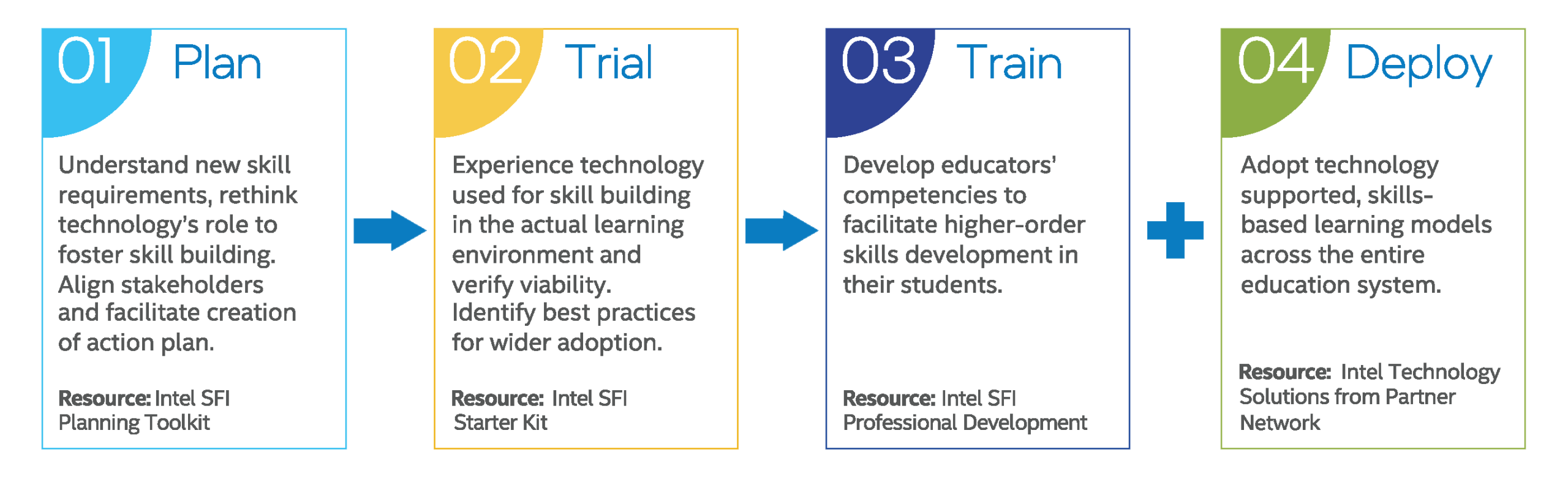
Towards a meaningful EdTech integration
Despite the efforts for digital transition in public sector by the government and the conception of plans for the introduction of technologies in education, the absence of a holistic coordinated approach in implementation processes have made it hard to achieve impactful reforms on the education sector and the meaningful integration of EdTech in Lebanese schools.
Lessons Learned from the pandemic showed us that addressing the digital divide, reorient the curriculum and empower teachers with professional development are priority steps when leading the path for educational transformation. In fact, digital divide has been a preoccupation of educational decision-makers when addressing challenges of the Public School. But simply delivering the best technology has proved to be insufficient: “An initial idea of creating more schools or delivering more technology seemed adequate to face the social digital divide, but the perspective of a second divide is now calling attention to the quality of the education being delivered and to its effects in terms of citizenship and social and economic development”.
Considering the current stage of EdTech adoption in Lebanese reality, and starting by addressing the digital divide, providing access to resources has become a priority, ensuring equal opportunities for students and teachers, regardless the type of school they are enrolled in. Nevertheless, jp.ik previous experience in educational projects’ implementation soon revealed innovative pedagogical practices were a natural effect of using new technologies in the classroom, “where knowledge was at the centre of the negotiation between technologies and practices and meaning at the heart of the contextual learning design”.
Thus, to foster education quality and meaningful integration of those resources, other questions proved to be critical: first of all, any decision (including technological resources) must be pedagogically driven; secondly, specificity of the context should be taken into account; and finally, it is crucial to identify and engage the different educational players involved.
Tackling a more complex context requires a comprehensive and inclusive approach, aligned with international priorities agenda (such as Sustainable Development Goals – SGD) and national strategic plans. MEHE and CERD are revisiting Lebanon’s education strategy and are looking to work with all stakeholders in crafting an updated strategic direction to move the education system forward.
Most educational ICT projects are based on strategic policies that promote ICT use: “i) to support economic growth, through a better prepared workforce that uses new technologies as productivity tools and applies generative skills to foster knowledge creation, innovation and entrepreneurship; ii) to promote social development, raising extended access to education, as well as enhancing social cohesion and sociocultural participation; and iii) to advance pedagogical reform, introducing ICT along with pedagogical innovation or curriculum restructuring (development of 21st century skills and reinforcement of one’s ability to direct her/his own learning and to apply concepts to solve complex real-world problems)”.
Project implementation and best practices
To support the Lebanese Government in the task of overcoming the ongoing challenges faced by the Education System, and to create opportunities to inspire educational transformation, this project will provide 20 teacher devices and 2000 student devices to public schools.
One of the recommended usages can be the creation of 20 pilot schools (1 teacher device and 100 student devices per school) where teachers can work on multiple levels of EdTech integration, across different school subjects, such as accessing to local digital resources, interacting with existing school infrastructure and access to online resources, collaborating locally and online within the school community or between school communities, integrating playful learning and gamification elements in the learning environment, and particularly cross-curricular project-based learning activities.
At the same time, conditions for an effective use of technology are needed such as equipment development, delivery, technical support and maintenance. For instance, it is crucial that a space for charging and storage of the devices is well defined, to ensure that the devices are always ready to be used. According to jp.ik previous experience on several scenarios worldwide, one way to drastically decrease the device downtime due to improper use is to create a system where a specific student is responsible for a specific device (a simple register will suffice). With the increased accountability, the students take better care of the devices, considering them as something much more personal than a shared resource or tool. Considering the number of student devices, they can be used in a complementary way, broadening the scope of technology integration in the classroom to surrounding areas (the school library, for instance). Also, if there is parent approval and minimum infrastructure requirements are met, some of the devices can be lent to students, extending the purposeful use of technology to their homes. The teachers can assign engaging tasks and activities for the students to conclude at home, or the students can request a device to take home because of the advantages that it brings for specific tasks.
PUBLIC SECTOR PILOT-SCHOOLS are recommended in this project as an opportunity to fully rethink pedagogy through the challenge of introducing technological resources in public schools, and to create the circumstances to experiment, monitor and access if technology is being assertively used and articulated to learning goals in relevant activities, and also to explore and understand how methodology must be reconfigured to take the best advantage of all technologies integration in Education, respecting the valuable old media along with the new.
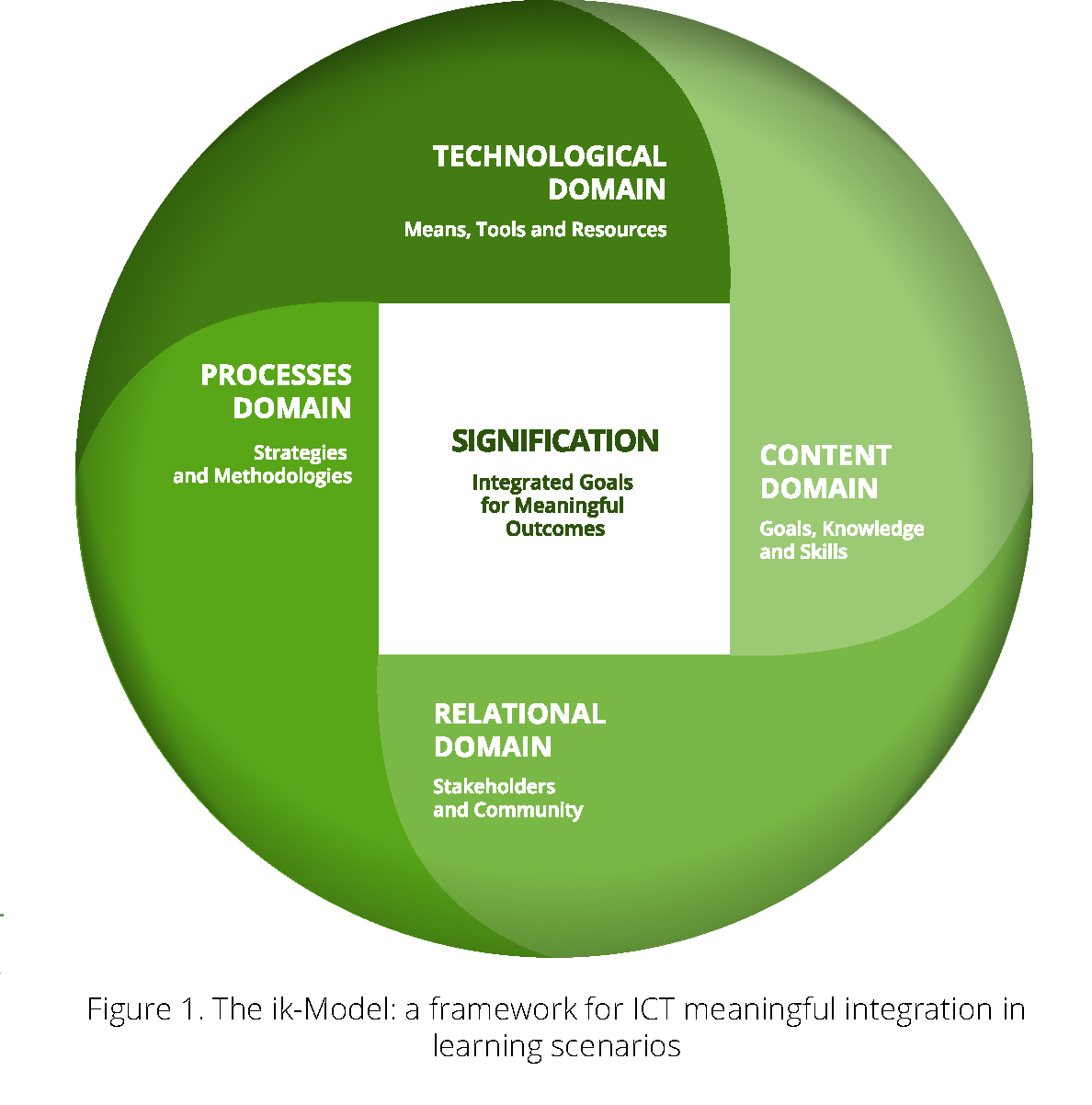
To drive educational change, many frameworks have been used as guidelines; among them ik.model54 can support the process of educational ICT integration during project lifecycle, and also work as a monitoring tool that enables decision-makers, school principals, teachers and other relevant stakeholders to evaluate digital integration complexity, and understand which domain should be focused and reinforced. This framework has proved to be able to capture the singularity of different learning contexts in a glocal perspective, so it might be helpful during the process of defining a future masterplan for meaningful EdTech adoption by driving essential questions. Following field experience and real case scenarios around the world, jp.ik framework for meaningful integration of technology in education scenarios places technology as one of the critical domains that should be considered when addressing educational transformation, along with content, process, and relational domains.
To address the challenges previously described faced by Lebanese education system, the Relational Domain might be a priority. Considering the ongoing economic crisis and recent history of tensions, political instability, refugees’ influx and structural complexity of the Lebanese society, in one hand, Education system’s main traits (centralization of decisions and fragmentation based on a great variety of stakeholders and the week regulation of the sector, added to the little power and other characteristics of school principals, and schools’ specific needs), how can new strategies be designed to reinforce citizenship and social cohesion and become true allies in promoting sustainable development and recovery from successive crises that disrupt the Education System?
Considering most recent Lebanon’s education strategy, not only Education Sector Response on strengthening the education system by developing crisis management and a stronger capacity-building at many levels (including service delivery and governance), but also by improving collaboration between partners, communities and parents, through an intersectoral coordinated intervention to guarantee access and retention in education. Starting the path for the co-creation of strategies (contextually defined by the engagement of critical stakeholders) might be vital to rescue the national culture of education based on active community dynamics, by engaging schools with the community, promoting parents’ participation in schools, and also by developing teacher’s community of practices to embrace a new mindset that contributes to educational transformation and the empowerment of both schools and the community.
This would be reflected on the content domain, once the need for the education system to promote quality learning, life skills and social cohesion is progressively embraced by national strategies.
Only by ensuring broad dissemination of these capacities in the population through quality education can Lebanon build lasting foundations for crisis recovery and sustainable development; so, one main question considering content might be how to systematically and effectively infuse these goals into the curriculum reform long lacking in Lebanese education system, for teachers to create opportunities to develop engaged life-long learners and active citizens? STEM (Science, Technology, Engineering and Maths) is one of the most shared and recognized trends to address emerging needs in the labour market and prepare students to the future, but this is a restricted vision which misconceives the importance of a holistic vision on Education. Adding Arts and Humanities to the equation (STEAM) can bring creativity, reflection and critical thinking to active and play-based learning, and ultimately challenge technology to foster critical skills in education contexts.
So, addressing gaps in terms of private and public sector quality and curricular specialization (STEM vs Humanities), by promoting the holistic development of students through the definition of education priorities and educational goals to be infused in curriculum reform, will create opportunities for students to be prepared to labour market, but also to be prepared for life and to be actual agents of change. In fact, promoting citizenship as foreseen by most recent national strategy, might be limp while contemporary history is not included in national curriculum. Some Recent trends establish a clear relation between media literacy and social sciences (MESH as for Media Literacy, Ethics, Sociology and History): recognizing the importance of media literacy for critically interact with the huge amount of information available, ethical reasoning and values for responsible decision making, sociology to understand institutional dynamics and the way critical social issues shape our world, and history to have the contextual narrative that will allow us to critically perceive technologies-related gains and threats.
Considering the process domain, this is where accurate and innovative pedagogical practices will be applied for technologies to be effective tools to reimagine an inspirational and engaging learning environment, based on the progressive transition from a cognitive teacher-centred approach on teaching and learning to an innovative model where teacher facilitates knowledge construction based on active learning methodologies. To create opportunities for teachers and students to reflect on the meaning and relevance of learning experiences, Project-based Learning with Interdisciplinary strategies and curricular infusion for knowledge construction, autonomy, collaboration, critical thinking, and problem solving would ultimately fulfil the goal of creating the critical skills and attitudes required for students to become future agents of social, economic, and cultural development.
At the same time, and considering the challenges faced by Lebanese Education System in holding public and private institutions accountable for outcomes and learning, standardization of frameworks for monitoring and evaluation based on revised learning goals is a national priority target, along with the strengthening of the existing SIMS for data-driven decision-making and efficient allocation of resources and expenditures according to future systemic diagnosis.
Considering the technological domain, Lebanese education system’s distribution of learning tools and resources has proved to be unequal, so, to accomplish recent strategy goal of providing access to appropriately equipped public schools and learning centres, the effective delivery a high-quality equitable education might be simultaneously ensured through a systemic change. This requires a paradigm shift where technology becomes a mean to challenge not only pedagogical methodologies and educational goals, but also to overcome social inequity and education quality gaps, intrinsic to Lebanese Education System and defined as national priorities in Lebanese political agendas.
Addressing the digital divide and quality gaps in Education delivery by strengthening the public sector as advocated in recent national strategy, cannot be disconnected from the context in which it happens, ideally by taking into account the specificity of the context and the needs of the different educational players involved. EdTech meaningful integration is therefore connected with media, information and digital literacy for the accurate selection and usage off the learning tool and resources for pedagogical purposes. EdTech will fulfil its goal of transforming pedagogical practices by the empowerment of teachers for EdTech use, overcoming the absence of continuous training of teachers not only on skills to face recent pandemic digital challenges, but mainly on pedagogical driven meaningful EdTech adoption.
Finally, the signification domain will be achieved by the interception of all dimensions above and systematic consideration of the priorities and needs of the education system. Considering the paramount role that intentionality and appropriation plays in this glocal framework, signification will occur in the context of the project implementation and ideally create the foundations for the development of a comprehensive macro project based on the pilots.
In the near future, the project might scale to the progressive consideration of integrated solutions based on the diversification of adoption models and the transformation of learning environments through effective meaningful integration of EdTech into Lebanese educational contexts.
jp.ik’s strategy started by acknowledging the importance of EdTech in the transformation of educational processes and evolved to the development of innovative solutions: considering public sector large scale educational projects, jp.ik offers comprehensive solutions for classroom and schools, including hardware and software, content, classroom tools, infrastructure, network and security products, as well as integrated solutions such as the Education Innovation Hub (EIH!), ideal for project-based learning, and the Inspire Educational Services (IES).
jp.ik’s layered approach provides the best out-of-the-box EdTech experience for teachers and students, where, with just electricity, the classroom can become an engaging and productive learning space using the built-in tools and content of the devices. That solution can be seamlessly integrated in the existing school infrastructure, allowing for the students to take advantage of the school’s local resources. Finally, with internet connectivity, students and teachers can benefit from all the tools, contents, and platforms available in the cloud.
For Lebanon to lead the path to a comprehensive sustainable education transformation enabled by EdTech adoption, considering Pedagogy in an intentional and systematic way, it is critical that a comprehensive diagnosis is aligned with evidence-based decision making for the digital transition process to be meaningful and reach the expected outcomes that are relevant for all those involved. Additionally, within a multilayer structure of stakeholders that need to be heard, actively engaged, and prepared to succeed in the roles they will play in the project rollout, it is also crucial to build capacity for action through a strong continuous professional development approach.
jp.ik believes one-size doesn’t fit all, so we develop a set of support services for governments including consultancy-in-context, professional development and impact assessment in order to understand, hand-to-hand with critical stakeholders, what might be the strategy to EdTech adoption that best serve educational, socio-economic and political needs of Lebanese reality.
To ensure adequacy, equity, quality, efficiency and specially significant impact, implementation should result in a dynamic and flexible intervention that ideally meet specific needs and ensure the involvement of the most relevant stakeholders. By the assumption that technologies cannot be seen as universal tools because they will be used in different contexts, the meaningful EdTech integration expresses this context dynamic and enables change by the intentional use of technologies. Achieving this is both a form of empowerment and a reimagination of technology as an agent of sustainable quality transformation of Education Systems.
BOX 3: Meaningful EdTech Integration in great diversity context: The Bolivian Case-Study
The Bolivian case is particularly interesting as a good example of an ICT integrative project that considers new technologies as contextual tools to achieve meaningful education goals, aligned with country’s national educational strategy of strengthening interculturality and multilingualism. Even though the Bolivian Government set up the project with an intention of innovating learning ecosystems and extending access to new technologies, their focus was clearly on using them to support national multilingual, intercultural and intracultural education. So, it was clear that introducing new technological devices created a great opportunity to fully rethink Pedagogy, while it also enabled to experiment, consolidate, and integrate the main premises of educational priorities. In this context, the relational axis played a really important role as it concerns the interactions between different community agents, reinforcing the importance of collaboration and communication, preserving the language cultural heritage.
This has also impact in the processes and content domains where personalized learning is not an option, and the skills connected with the curriculum are seen as important as more generative competencies, with a focus on those that reinforce cultural shared identity. These assumptions were clearly aligned with the country’s reality and needs, what made signification an intentional axis of this particular project. In Bolivia, teacher training was designed to ensure an opportunity to create meaningful learning activities that use several technologies to address particular learning goals and reinforce the sense of community participation and cultural links.
Envisioning Bolivia as a unique scenario, jp.ik was a key stakeholder on the development of the plan for ICT integration in the education system, relying on the main asset of knowledge transfer: the engagement of the Bolivian people and the collaboration between the different stakeholders established the success formula for the sustainability of the project.